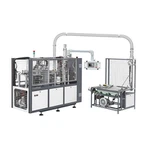
A paper cup machine is used for the mass production of paper cups, which are commonly used for serving hot and cold beverages. The process involves several steps, and different types of paper cup machines may have variations in their configurations.
Feeding Raw Material:
The process begins with feeding the raw material, which is typically a roll of paper coated with a layer of polyethylene (PE) to make it suitable for holding liquids. The roll is mounted on the machine, and the paper is unwound.
Printing (Optional):
Some paper cup machines have printing units to add designs, branding, or information to the paper before cup formation. This step is optional, depending on the machine configuration and customer requirements.
Die Cutting:
The paper is then cut into flat blanks of the appropriate size using a die-cutting mechanism. The die-cutting tool creates the shape of the cup and includes areas for folding and sealing.
Forming the Cup Body:
The flat blanks are transported to the cup-forming section, where each blank is folded and glued to form a cylindrical shape. The seam is sealed to create the body of the cup.
Bottom Punching:
The formed cups are then moved to the bottom-punching station, where a punch cuts out the bottom shape from a separate paper roll. The bottom is attached to the cup body.
Curling (Optional):
In some machines, an additional step involves curling the rim of the cup to provide a smoother edge for drinking. This is often seen in cups for hot beverages.
Quality Control:
Automated sensors or vision systems may be used for quality control, ensuring that each cup meets the required standards in terms of size, shape, and printing quality.