
Latest Products
Contact Us
- No.9, Yuandong Road, Feiyun Street, Ruian City, Zhejiang Province, China
- monica@aeast.com
- +86-577-65577123
Why Choose Us
Our company is committed to delivering high-quality products and services that are designed to empower our clients and help them achieve their goals. We are passionate about what we do, and we are committed to helping our clients succeed. We specialize in producing Paper Roll Punching Machine, Roll Die Cutting Machine, and other Cutting Machine.
Quality Assurance
We have obtained ISO9001: 2000 and ISO14001: 2004 certified, and our paper cup forming machine, die cutting machine, and other equipment are SGS and CE approved.
Rich Experience in Production
Our company is founded in 1998, is specialized in disposable paper container machine production. With over 20-years' experience, This allows us to offer a comprehensive suite of products and services that are tailored to meet the unique needs of each individual client.
After-Sales Service
Our company is committed to delivering high-quality products and services, if you have any questions about the product, please contact us in time and we will do our best to handle it for you.
Advanced Equipment
We will process and produce your products through CNC center, grinding machine, milling machine, turning machine, boring mill and other advanced equipment.
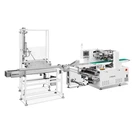
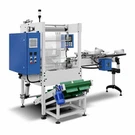
 Roll Die Cutting Machine
Perfect worm wheel and worm transmission system ensures the powerful and steady pressure and makes the cutting accurately while the machine runs with high speed, has features of low noise, smooth
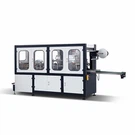
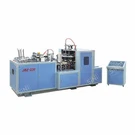
Add to Inquiry Paper Roll Punching Machine
The paper roll punching machine is a highly efficient and time-saving equipment that plays a vital role in the modern paper industry. It offers a high level of precision and performance, leading to a
Add to Inquiry
What is Cutting Machine
A cutting machine is a machine that cuts all kinds of shapes and creations from materials. This makes a cutting job easier and faster for you. They are a go-to tool for creating multiple handmade pieces or producing large numbers of cutout shapes with the same design. Die cutting machines can also be used for crafting techniques like embossing, debossing, and hot foiling techniques! If you want to know the specifications and prices of Cutting Machine, please contact us!
Advantage of Cutting Machine
Reduce Costs
Hand cutting is a slow process that requires many workers to produce at scale. With hand cutting, workers can only cut one or two layers of fabric at a time. Although manual cutting does not carry the huge initial investment burden, the labor costs are much higher for factories that want to achieve high volumes, which is not beneficial for most high production garment factories.
As with all cutting machines, the initial labor cost of purchasing an automatic cutting machine is bound to increase, not only in terms of time to purchase and install the machine, but also in terms of training workers on how to use the machine and regular maintenance. There is also the cost of repairing the machine if it breaks down to consider. It may seem like a large investment, but in the long run, automatic cutting machines are more cost effective. Automatic cutting is not only more efficient and requires fewer workers, but the high level of machine automation means that workers' skills are not tied up in experience and can be retrained or assigned to other departments - increasing factory productivity and flexibility.
Accurate and Consistent
Manual cutting is prone to human error, resulting in fabric waste and inaccurate cuts. Accurate cutting reduces waste; the fabric is cut to the correct shape on the first cut. Automatic fabric cutters minimize the risk of product defects due to poor material cutting or human error. Accurate cutting means consistency in the finished product, which in turn leads to higher customer satisfaction.
Enhance Productivity
Factory workers can get tired and hot during shifts in the factory shop. The repetitive strain caused by using a manual fabric cutter for hours on end is uncomfortable and can indirectly affect the quality of the cut. Workers do not always work at their best for long hours and factories have to find alternative solutions to maintain production capacity.
Automated cutting machines are essential for factories with high production volumes, as they operate faster than manual cutting, thereby increasing productivity and meeting the needs of factories with high production capacity.
Reduce Manpower
Manual cutting is labor-intensive and unsustainable for hours at a time. As workers can only cut one or two layers of fabric with a manual fabric cutter at a time, more manpower is required to complete orders.
Automatic cutting machines are ideal for cutting large quantities of fabric at a time and diverting excess manpower to other units, thus increasing efficiency and productivity in the workplace. The factory can provide high order volumes with a small number of employees.
Type of Cutting Machine
Manual cutting
Hand scissors are used for cutting fabric plies manually. Hand scissors are not machines but very useful cutting equipment. Factories may have semi-automatic and fully automatic machines for fabric cutting, but can't avoid use of hand scissors in cutting section. Scissors are common tool in cutting process and hand scissors ha many use in cutting room.
Semi-Automatic Cutting Machines
- Straight Knife cutting machine:The straight knife is a common means of cutting lays in conventional cutting rooms because it is versatile, portable, cheaper than a band knife, more accurate on curves than a round knife and relatively reliable and easy to maintain. Even if a band knife is used for the main cutting operation, a straight knife would be used to separate the lay into sections for easier handling.
- Band Knife cutting machine:Band knives are used when a higher standard of cutting accuracy is required than can be obtained with a straight knife. Pieces to be cut are first cut on a block, and then cut exactly on a band knife.
- Round knife cutting machine: A round knife is used only for straight lines or lower no of lays of relatively few plies.
- Die cutting machine: This machine is useful where small motifs with particular shape and pattern and accuracy in cutting are needed.
Automatic Cutting Machines
There are different types of automatic fabric cutting machines. Here majorly used cutting machines in the garment industry are shown.
- Computerized cutting machine:
Computerized cutting machines are used where high volume of garments is manufactured. This machine cuts fabric layers as per command given in computer system. Automatic cutting machine is also known as CNC machine. In the automatic cutting room, fabrics are spread on the table by auto spreader and the lay is positioned in the cutting table prior to automatic cutting. Many videos are available on the Youtube for automatic cutting machines.
- Rib cutting machine:
Narrow fabric tape of rib is cut from knits fabric. Ribs are used in t-shirts neck finishing or piping operations and many other knits apparel manufacturing
- Laser cutting machine:
Instead on blade fabric layer is cut by laser rays. Laser cutting machine is also computer controlled machine.
How to Maintenance of Cutting Machine
Maintenance of an Orbital Cutting Machine
Prior to starting your orbital cutting machine it is important to check for small metal shavings that may be present. Remove any with a small brush; especially if you cut stainless steel.
We firmly discourage the use of compressed air as these chips can be propelled towards the inner part of the cutting machine which will create premature wear of the machinery parts.
Regular Lubrication for a High Performance Cut
maintenance-of-an-orbital-cutting-machineProper lubrication of any moving parts plays an important part in the machinery's performance. Suppliers, typically in the instruction manual, indicate precisely where and the required frequency lubrication of the machinery should be carried out. Keep in mind that frequency of lubrication depends largely on the number of cuts carried out daily. Some users cut about ten times a day, while others do 300 or more. Another aspect to consider is the diameter and wall thickness of the tube being cut.
Ease of Lubrication
Our cutting machine has three points where the grease is injected for proper lubrication. All are at the rear of the machine, two lubricate the front turntable which is constantly moving and supports the weight of the cutting motor. The third, at the base plate of the frame, maintains the clamping device for the tubes.
The Quality of the Cut
An orbital cutting machine, when routine maintenance is not carried out correctly will produce a lowered quality of the cut such as; the cut not being perfectly perpendicular or and offset of the pipe ends.
Vibrations during use will also be noticed; often this is a direct link with the quantity of grease situated at the frame of the machine. If you continue to use the machine, it can become blocked or the rotation may be affected. When this happens, we strongly recommend to contact your supplier for routine maintenance of your orbital cutting machine.
How to Choose Cutting Machine
Set a Budget Range
Before purchasing a die-cutting machine, set a budget range based on what you can afford. Prices for different die-cutting machines vary greatly, depending on the brand, features, and functionality. Therefore, it is best to consider the long-term value and durability of the machine within your budget.
Types of Machines
There are different types of die-cutting machines, such as rotary die-cutting machines, flatbed die-cutting machines, and laser die-cutting machines. Each type has its own benefits and suitability for specific applications.
Automation and Control Systems
Some die-cutters offer manual operation, while others are equipped with advanced computerized or electronic control systems. Consider your preferences and the complexity of your project to determine the level of automation and control you need.
Material Compatibility
Consider the type of material you will be using. Die-cutters can handle a variety of materials, including paper, cardboard, fabric, plastic, and more. Make sure you choose a machine that can efficiently and accurately cut the materials you plan to use.
Cutting Size
Consider the maximum cutting size or width of the machine. Die-cutters come in a variety of sizes and formats; make sure it can accommodate the material you plan to use and the size of your project.
Cutting Speed and Efficiency
Evaluate the cutting speed and capacity of the machine. The speed of your die-cutter will have a direct impact on your productivity. Look for a machine that can operate efficiently at high speeds without compromising accuracy and quality.
Support and Warranty
Check the manufacturer's warranty and customer support options. A reputable company with good customer service can help you if you experience any problems or have questions about your machine.
Safety Features
Die-cutting machines can involve sharp blades and moving parts, so safety is critical. Ensure the machine has appropriate safety features, such as emergency stop buttons, safety enclosures, and safety sensors.
What Should We Pay Attention To When Designing The Cutting Process of Cutting Machines?
Blanks
Blanks are the cuts that form the edges of the finished part. It separates the part from the stock material during the stripping stage. Sharp internal or external corners must be avoided during the part and die design, as this serves as a stress point during stripping and handling. At this stress point tearing and fracture commonly occurs, especially for thin and soft materials.
Holes
Holes are empty spaces that are enclosed within the perimeter of the part, and can be made by using a punch or the steel rule. Placement of holes along the plane is limited to prevent tearing and inconvenience:
Place the hole at least twice the material thickness from the edge to prevent tearing and bulging during the stripping step and handling process.
If a series of holes or other similar design features must be made, the clearance between two adjacent holes must be twice the material thickness. If possible, a single oblong hole may be considered to replace the series of holes.
Scores
Scores in the form of cuts, creases, and perforated scores make folding and tearing convenient for the user. However, it gives additional stress points in the finished part.
Place a series of holes four times the material thickness away from the score line.
Avoid placing a hole in the score line. This prevents unwanted tears.
Tabs
Tabs are included in the part design to attach corners and edges. This attachment gives the stock material its three-dimensional feature. A tab may be located outside the edge (external tab) or enclosed within the plane (internal tab).
If holes are to be made in the tab, place the hole at least twice the material thickness from the edge.
Place a hole to terminate the internal ends of the tab. This is to dissipate the stress which causes cracking or tearing during handling. The internal ends should not be terminated with a bare end.
Certifications


Our Factory


Frequently Asked Questions
We're professional cutting machine manufacturers and suppliers in China for 25 years. Please feel free to buy high-grade cutting machine made in China here from our factory. All machines are with high quality and competitive price.
Cutting Machine, Paper Roll Punching Machine, Roll Die Cutting Machine