
Latest Products
Contact Us
- No.9, Yuandong Road, Feiyun Street, Ruian City, Zhejiang Province, China
- monica@aeast.com
- +86-577-65577123
Why Choose Us
Our company is committed to delivering high-quality products and services that are designed to empower our clients and help them achieve their goals. We are passionate about what we do, and we are committed to helping our clients succeed. We specialize in producing Paper Roll Punching Machine, Roll Die Cutting Machine, and other Cutting Machine.
Quality Assurance
We have obtained ISO9001: 2000 and ISO14001: 2004 certified, and our paper cup forming machine, die cutting machine, and other equipment are SGS and CE approved.
Rich Experience in Production
Our company is founded in 1998, is specialized in disposable paper container machine production. With over 20-years' experience, This allows us to offer a comprehensive suite of products and services that are tailored to meet the unique needs of each individual client.
After-Sales Service
Our company is committed to delivering high-quality products and services, if you have any questions about the product, please contact us in time and we will do our best to handle it for you.
Advanced Equipment
We will process and produce your products through CNC center, grinding machine, milling machine, turning machine, boring mill and other advanced equipment.
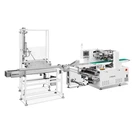
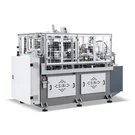
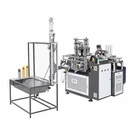
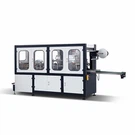
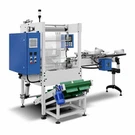
 Paper Cup Detection Machine
The paper cup defect inspection machine is a remarkable invention that caters to the needs of the paper cup industry. The machine is designed to operate at a maximum speed of 200 cups per minute,
Add to Inquiry Cup Faltiness Testing Machine Plug in Type
One of the most significant advantages of using this machine is the ability to detect various types of cup defects. Whether it is a stain, dirt, or any other contamination, the machine will scan
Add to Inquiry
What is Detection Machine
Within a manufacturing plant, manufacturing defect detection refers to the systems and processes in place to ensure that defective products don't reach customers. In most settings, defect detection is performed with a visual defect inspection-in-line or end-of-line. If you want to know the specifications and prices of Detection Machine, please contact us!
Advantage of Detection Machine
Brand Reputation
A brand's reputation is closely tied to the quality of its products. Defect Inspection Machines help maintain a high standard of product, reducing the likelihood of customer complaints and product recalls.
High Accuracy and Precision
Defect Inspection Machines offer unparalleled accuracy and precision in detecting even the tiniest defects. This level of scrutiny significantly reduces the chances of faulty products reaching consumers.
Real-Time Monitoring and Reporting
Defect Inspection Machines provide real-time monitoring and detailed reports of the inspection results. Manufacturers can access valuable data on product quality, defect rates, and overall line performance, enabling them to make data-driven decisions for process improvement.
Minimized Human Errors
Traditional manual inspections are prone to human errors, fatigue, and inconsistencies. Defect Inspection Machines eliminate these concerns, offering a reliable and objective inspection process.
Versatility and Adaptability
Defect Inspection Machines can be programmed to inspect various types of paper cups. They are adaptable to changing production requirements and can be easily integrated into existing packaging lines.
Ensuring Product Quality
One of the primary advantages of using a Defect Inspection Machine is its ability to maintain consistent product quality. By inspecting products at various stages of production, manufacturers can identify and rectify defects early on, preventing faulty items from reaching consumers.
Increasing Efficiency and Reducing Costs
Integrating a Defect Inspection Machine streamlines the manufacturing process, leading to increased efficiency. Automated inspections are faster than manual checks, allowing for higher production rates. Moreover, identifying defects early minimizes costly rework and wastage, saving both time and resources.
Minimizing Defects and Reworks
Defect Inspection Machines leave no room for human errors and can detect even the tiniest defects in products. This minimizes the occurrence of defects and subsequent reworks, resulting in improved overall product quality.
Detection Machine Working Principle Classification
2D Vision Inspection
2D Vision Inspection is suitable for inspecting flat surfaces and is commonly used in applications like label verification and print quality checks.
3D Vision Inspection
3D Vision Inspection enables the examination of complex shapes and dimensions, making it ideal for industries requiring precision measurements.
Color Vision Inspection
Color Vision Inspection detects color variations, ensuring products meet specific color requirements in industries like cosmetics and textiles.
Robot-guided Vision Inspection
Robot-guided Vision Inspection employs robotic arms to move products through inspection stations, allowing for flexibility and adaptability in the manufacturing process.
Integrating Vision Inspection Systems in Manufacturing
The successful implementation of Vision Inspection Systems requires careful planning and integration within the manufacturing process.
Automated Production Lines
Vision Inspection Systems can be seamlessly integrated into automated production lines, facilitating continuous inspections without disrupting workflow.
Quality Control Stations
Dedicated quality control stations equipped with Vision Inspection Systems allow manufacturers to conduct thorough inspections at critical stages of production.
Packaging and Labeling Verification
Vision Inspection Systems can verify the accuracy of packaging and labeling, preventing incorrect packaging and ensuring compliance with regulations.
Overcoming Challenges in Vision Inspection
Despite its many advantages, Vision Inspection Systems face certain challenges that need to be addressed.
Handling Complex Shapes and Sizes
Inspecting irregularly shaped or large products requires advanced algorithms and high-resolution cameras to capture accurate data.
Dealing with Varied Lighting Conditions
Vision Inspection Systems must adapt to varying lighting conditions in different manufacturing environments to ensure consistent performance.
Integrating with Existing Manufacturing Systems
Integrating Vision Inspection Systems with pre-existing manufacturing systems can be complex and requires seamless communication between technologies.

How to Choose Detection Machine
Defining Your Budget
Before embarking on the selection process, establish a clear budget for the quality inspection machine. Take into account not only the upfront costs but also ongoing expenses related to maintenance, support, and potential future upgrades. This proactive approach ensures that your investment aligns with financial considerations while meeting the desired quality control objectives.
Value for Investment
While cost is a critical factor, it is equally important to assess the value offered by the inspection machine. Consider not just the immediate financial outlay but also the long-term returns in terms of improved product quality, reduced defects, and increased efficiency. Striking a balance between cost-effectiveness and the machine's overall value ensures a wise investment decision.
Comparing Options
Explore multiple options within your budget range. Compare the features, capabilities, and additional services offered by different manufacturers. Sometimes a slightly higher upfront cost may be justified by advanced features or superior performance, leading to long-term benefits. Thoroughly analyze each option to make an informed decision that aligns with both your financial constraints and quality control requirements.
Hidden Costs and Maintenance
Beyond the initial purchase, consider potential hidden costs associated with maintenance, calibration, and software updates. A machine with lower upfront costs may incur higher maintenance expenses over time. Factor in the reliability of the manufacturer's support and the availability of spare parts to ensure smooth operations without unexpected financial burdens.
Negotiating and Customization
Explore the possibility of negotiating prices with the manufacturer. Some suppliers may offer customization options or bundle services that could provide cost advantages. Open communication with manufacturers regarding your specific needs and financial constraints can lead to tailored solutions that meet both your quality standards and budgetary considerations.
Electro-Mechanical
The most basic sensor is an electromechanical limit switch. These devices contain a sensitive micro switch that changes state when a mechanical actuator is displaced by the detected object. Rollers, whiskers and levers are some of the actuator versions offered by many different manufacturers. Since these devices consist of moving parts, they are prone to wear and damage. Also, physical contact with the target object is not always desirable or possible. This type of sensing technology is used in our precision electromechanical assembly systems.
Pneumatic
These sensors utilize compressed air and a sensitive diaphragm valve to detect the presence of objects. Compressed air bleeds from a tiny orifice until the target blocks the stream, creating a minute change in air pressure. This pressure change is detected by a downstream diaphragm switch that produces an electrical control signal. Environments that require an "explosion proof" sensor, or are extremely dirty, are good applications for this type of device. KTC uses this kind of sensor in high-end custom machinery.
Magnetic
Magnetic sensors are actuated by the presence of a permanent magnet within their sensing range. Two different operating principles are commonly used, either a reed contact or a Hall effect transducer. In both cases, the presence of a magnetic field produces a change of state in an electrical signal. Reed and Hall effect sensors are often used to detect the presence of an air cylinder's internal piston. The failure rate of reed switches is relatively high, so many engineers specify Hall effect sensors when possible.
Inductive
These proximity switches detect metallic objects that cause a disruption in the electromagnetic field emanating from the body of the sensor. The reliable detection distance varies depending on the type of metal and also the amount of metal within the sensor's range. These sensors come in many sizes and shapes. They are very reliable and cost effective; therefore, make up a large percentage of the sensors used in automation and process equipment.
Capacitive
These proximity switches detect non-metallic objects that have a dielectric constant difference from air. This makes them ideal for a wide range of materials such as wood, paper, fabric, liquid and plastic. Their operation is similar to inductive sensors, but instead of detecting a change in an electromagnetic field, they utilize an electrostatic field.
Photoelectric
Photoelectric sensors use different technologies that address a variety of diverse application configurations. The common characteristic is that they all send out a beam light and then detect a change in the amount of light received back. The three most popular sensors are diffuse, reflective and through-beam. The light sources used – visible, infrared, LED or laser – will affect the sensing distance. In diffuse sensors, the presence of an object in the optical field of view causes diffused reflection of the beam. The receiver detects the light reflecting back from the object itself. Reflective and through-beam sensors create a beam of light and detect any opaque object that breaks the beam. Laser sensors can create a beam of light 50 meters or longer. Transparent objects, or objects with a varying surface finish, can be problematic for photoelectric sensors.
Ultrasonic
These devices typically transmit a short burst of ultrasonic sound toward a target, which reflects the sound back to the sensor. The sound wave is well reflected by almost all dense materials (metal, wood, plastic, glass, liquid, etc.) and is not affected by color, transparent or shiny objects. Foam-like materials that absorb sound waves would not be a reliable application of this sensor type. Ultrasonic sensors are often used to determine the level of liquids in processing tanks.
How Can Detection Machine be Effectively Maintained?
Check Calibration and Accuracy
One of the most important aspects of maintaining Detection Machine is to check its calibration and accuracy regularly. Calibration is the process of adjusting the equipment to match a standard or reference value, while accuracy is the degree of closeness between the measurement and the true value. If the equipment is not calibrated or accurate, it could lead to false or inconsistent results, which could affect the quality of the product or the customer satisfaction. Therefore, you should follow the manufacturer's guidelines and use certified calibration tools and methods to verify and correct the calibration and accuracy of your equipment.
Clean and Inspect the Equipment
Another essential step in maintaining Detection Machine is to clean and inspect it frequently. Cleaning the equipment helps to remove dust, dirt, grease, or other contaminants that could affect its performance or damage its components. Inspecting the equipment helps to identify any signs of wear, tear, corrosion, or damage that could affect its functionality or safety. You should use the appropriate cleaning materials and methods for each type of equipment and follow the manufacturer's instructions for inspection and repair. You should also keep a record of the cleaning and inspection dates and results for future reference.
Update Software and Firmware
Detection Machine often relies on software and firmware to perform its tasks and communicate with other devices. Software and firmware are programs that control the operation and features of the equipment. However, these programs may become outdated, corrupted, or incompatible over time, which could affect the performance or security of the equipment. Therefore, you should update the software and firmware of your equipment regularly to ensure that it has the latest features, bug fixes, and security patches. You should also backup your data and settings before updating and follow the manufacturer's instructions for the update process.
Train and Educate Staff
One of the most common causes of Detection Machine failure is human error. Human error can occur when staff are not properly trained or educated on how to use, maintain, or troubleshoot the equipment. This can lead to mistakes, accidents, or misuse that could damage the equipment or compromise the results. Therefore, you should train and educate your staff on how to operate, maintain, and troubleshoot the equipment correctly and safely. You should also provide them with manuals, guides, and support resources to help them with any questions or issues they may encounter.
Follow Preventive Maintenance Schedule
Finally, one of the best ways to maintain Detection Machine is to follow a preventive maintenance schedule. Preventive maintenance is the practice of performing regular and planned maintenance activities to prevent or reduce the likelihood of equipment failure or breakdown. Preventive maintenance can help to extend the lifespan, improve the efficiency, and reduce the costs of the equipment. You should follow the manufacturer's recommendations and your own experience to create and follow a preventive maintenance schedule for your equipment. You should also document and review the preventive maintenance activities and results to monitor the performance and condition of the equipment.
What Should you Pay Attention to Before using the Detection Machine?
Read the User Manual
Begin by thoroughly reading the user manual provided by the manufacturer. This document contains vital information about the equipment's specifications, proper usage, safety guidelines, and maintenance procedures.
Equipment Calibration
Ensure that the inspection equipment is properly calibrated before use. Regular calibration is crucial for maintaining accuracy. Follow the manufacturer's recommended calibration schedule and procedures.
Environmental Conditions
Consider the environmental conditions required for optimal equipment performance. Check temperature, humidity, and lighting specifications, and make sure the equipment operates within the prescribed range.
Proper Handling and Storage
Handle the equipment with care to prevent damage. When not in use, store it in a clean and safe environment. Avoid exposing the equipment to extreme temperatures, dust, or moisture.
Operator Training
Provide comprehensive training to operators on how to use the inspection equipment correctly. Trained personnel are less likely to make errors during setup, operation, or interpretation of results.
Safety Precautions
Adhere to all safety precautions outlined in the user manual. This may include wearing personal protective equipment, avoiding contact with moving parts, and following electrical safety guidelines. Ensure that operators are aware of emergency procedures.
Pre-Inspection Checks
Conduct pre-inspection checks to ensure that all components of the equipment are in working order. Check for any signs of wear, damage, or malfunctions, and address issues promptly.
Record Keeping
Maintain a record of equipment usage, calibration dates, and any maintenance activities performed. Proper record-keeping is essential for quality control, audit purposes, and compliance with industry standards.
Software Updates
Stay informed about software updates provided by the manufacturer. Regularly update the inspection software to benefit from improvements, bug fixes, and new features that enhance the equipment's performance.
Quality Control Samples
Conduct quality control checks using known standards or samples with predetermined defects. This helps verify that the inspection equipment consistently provides accurate and reliable results.
Certifications


Our Factory


Frequently Asked Questions
We're professional detection machine manufacturers and suppliers in China for 25 years. Please feel free to buy high-grade detection machine made in China here from our factory. All machines are with high quality and competitive price.
Cup Faltiness Testing Machine Plug in Type, Detection Machine, Paper Cup Detection Machine