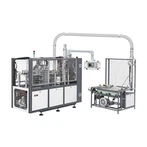
Paper slitting machines is mainly used for lengthways slitting, preset preset widths rewinding or ribbon cutting of broad-band paper rolls according to production requirements. For enterprises in printing, packaging, labeling and papermaking, the accuracy of slitting dimensions directly affects downstream processing efficiency, material utilization rates and the finished product quality. Inconsistent slitting width, uneven roll edges, or deviations during operation can lead to material waste and even affect the normal operation of subsequent production lines.
As a supplier of paper slitting machines, we recommend comprehensive control of equipment structure, blade configuration, tension control, curling guidance system and routine maintenance to ensure consistent accuracy of paper cutters.

1.Seam width and Blade Positions Properly set
Blade positioning is the key factor that affects slitting precision. Before starting production, the operator must set the target width according to order specification and adjust the position of each set of blades accurately.
Improper blade installation (if not aligned inparallel), incorrect spacing or loose fixture may result in the finished paper rolls width deviation.
In order to minimize these problems, we recommend the following:
-Verify the target width of each paper strip against the production order.
-Check the blade installation positions to ensure the blade is firmly fastened.
-Verify blade spacing using appropriate measuring tools.
-Recheck the tangent position when specifications change between orders.
For manufacturers who require frequent specification changes, it is recommended to prioritise devices with scale-based positioning, quick blade adjustment or automatic width settings to reduce errors associated with manual adjustments.
2.Choose the right blade and keep it Sharp Edges
The type of blade, sharpness and mounting condition all affect the cutting quality. Worn, nicked, or improperly mated blades can cause burrs, excessive paper dust and uneven edges; in severe cases, this can affect the edge quality of the finished paper roll.
Due to the different base weight, thickness and material properties paper, suitable blade type and cutting method should be selected according to the specific material processed. Daily highlights:
1.Periodically inspect the wear and tear of cutting blade and replace or repair it in time.
2.Adjust blade clearance, pressure and mounting position according to equipment specification.
3.Remove paper scraps and dust from around the blade to prevent it from affecting cutting quality.
4.Before starting mass production, paper of different thickness and materials is test cuts to verify the cutting quality.
Note that size accuracy and cutting quality are different. While sharp blades improve cutting, the final width must still be verified by precise blade positioning and measurement of the finished product.
3. Steady release and tension
Tension control is the key to ensure stability of the paper separation process. Too much tension during winching, slitting or winching can cause paper to stretch, wrinkle or deform at the edges; conversely, too little tension can lead to relaxation, winding or uneven winding.
These problems not only affect the appearance of the finished product, but also lead to fluctuations in actual measurement results.
It is recommended to determine appropriate tension levels according to the basic weight, thickness, width and material properties of the paper and to monitor the change in tension during production. For high-speed production line, the closed loop tension control system can be considered and the tension can be adjusted automatically according to the working condition.
In addition, ensure the smooth operation of rollout shafts, guide rollers and rollout shafts to prevent tension fluctuations due to mechanical resistance anomalies or shaft imbalance.
4. Minimizing Web roaming with automated Web boot systems
Reticulum drift is a common cause of unstable slitting dimensions. Problems such as uneven edges of parent roll, misalignment during expansion or improper installation of guide rollers can prevent paper from travelling along a predetermined path.
Automatic paper rolling guidance systems usually use sensors to detect paper edges or a reference position and control actuators to adjust the position of paper rolling or guide components to minimize lateral bias.
To optimize web guiding performance, consider the following:
Choose the appropriate detection method according to the paper material and equipment configuration. -Ensure that the guide sensor is installed correctly and the detection area is kept clean.
-Check whether guide rollers is parallel to prevent mechanical errors from continuing to affect the trip of the frame.
-Verify that guidance and response status are normal before production begins.
Automatic web guiding reduces the risk of lateral vane deflection, but it isnot a substitute for blade positioning calibration. If there is an error in the mechanical data of the device, it still requires to be checked and adjusted.
5. Inspection of mechanical structure and operation
After a prolonged period of operation, bearing wear, guide rollers loosening, drive component clearance increase, frame vibration and so on will affect the operating stability.
Especially during high-speed slitting, even small mechanical irregularities can be magnified, causing the position of the curls to fluctuate or the quality of the curls to decrease.
Periodic inspections are recommended:
-The working state of the slitting and winding shafts.
Guide roller surfaces (check for damage, stains or abnormal wear).
-Bearings, drive components and mounting bolts.
-abnormal vibration or noise during operation.
For newly purchased equipment, it is recommended to verify the parallelism, positioning accuracy and operational stability of key components during installation and commissioning. For older equipment, repairs should be based on actual fault conditions, rather than attempting to solve all problems simply by adjusting operational parameters.
6. Carry out the first inspection and spot checks during the process.
Even after equipment parameters have been determined, it is not recommended to proceed directly to long-term continuous production. Factors such as the condition of the parent roll, ambient temperature and humidity, operating speed and blade wear will all lead to the variation of the splitter effect.
A more reliable approach would be to establish anarticle I verification and in-process spot checks mechanism.
Before production, perform a test cut and check the width of each web using appropriate measuring tools. Mass production can only begin after confirmation that dimensions meet order specifications. In the course of operation, according to production batches, operation time or order requirements, periodic spot checks are carried out and actual width and deviation are recorded. If dimensions are found to be beyond the permitted range, stop immediately to check the blade position, tension, web guiding and mechanical performance to prevent the continued production of non-conforming products.
In addition, enterprises should clearly define the allowable size tolerance of their products. The actual accuracy of the paper cutting machine depends on factors such as equipment type, processing material, operating speed and measurement conditions. Therefore, a single general precision value should not be adopted across the board.
Frequently Asked Questions
Q1: What factors are most likely to lead to inaccurate paper slitting widths?
Common factors include incorrect blade positioning, blade wear, web drift (dislocation), tension fluctuations and mechanical irregularities. It is recommended to check blade spacing and the web's running path before investigating tension and mechanical components.
Q2: Is it more difficult to ensure size accuracy with high-speed paper slitters?
High-speed operation requires higher tension control, web-oriented response and mechanical stability. However, as long as the equipment design is reasonable, parameter setting is correct and maintenance is proper, high-speed slitters can achieve stable size control. Actual performance shall be assessed according to equipment specifications and actual test results.
Q3: How to deal with uneven edges after paper slitting?
First, check if the blade is sharp, install it correctly, and observe if the paper mesh is loose. If the cutting itself is clean, but the roll end is uneven, check the tension settings, winding state and operation of the guide rollers.
Q4: How to determine if a paper slitter's precision before purchasing?
Before purchasing, communicate clearly with supplier the target slitting width, allowable size tolerance, paper weight range and production speed requirements. Request relevant technical parameters or test verification results. For orders with high accuracy, it is best to test with materials that actually need processing.
Q5: How do you maintain the size accuracy of a a paper slitter in the long run?
Establish a regular calibration system, as well as check blade, tension, guide network system and finished product sampling. In addition, recording production parameters for different materials and specifications helps to reduce the need for repetitive setup adjustments and improve production stability. In summary, the size accuracy of a paper slitter is not determined by a single component, but by the combination of blade positioning, tension control, automatic web guiding, mechanical structure, quality inspection and so on. For purchasing enterprises, the key to stable, long-term production lies to select equipment that meets special requirements in terms of materials, speed of production, tolerances of dimensions, and to establish standard operating and maintenance procedures.
Send feedback